117 Strand Street — Wallcovering as the Architecture of the Workplace
The best commercial interiors don't feel like offices. They feel like places people choose to be in — environments that support focused work, encourage conversation, and communicate the values of the organisation that inhabits them. At 117 Strand Street, Tetris Design & Build has achieved exactly this. And across multiple zones of this large-scale Cape Town fitout, wallcovering is the material doing the most important spatial work.
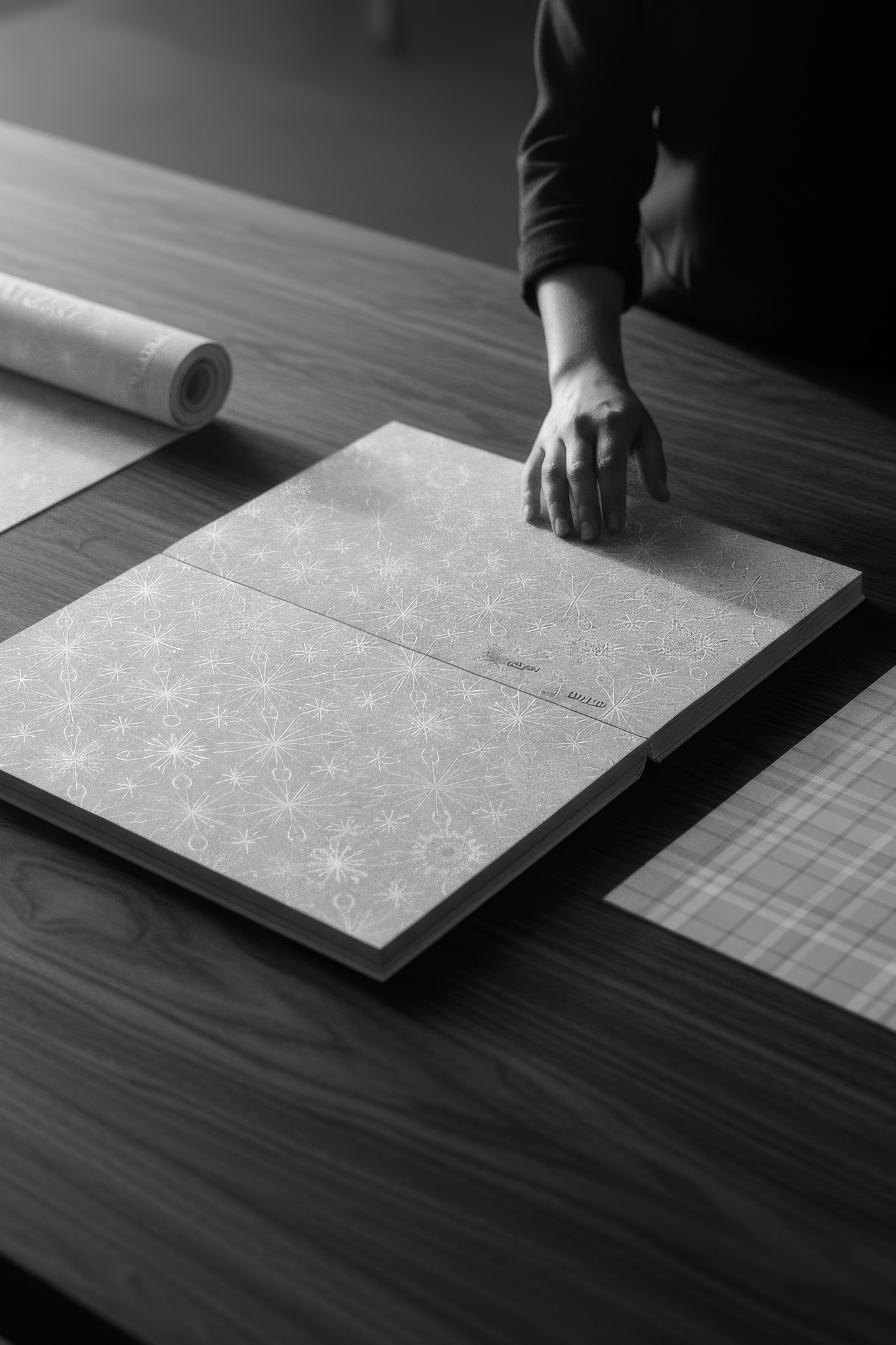
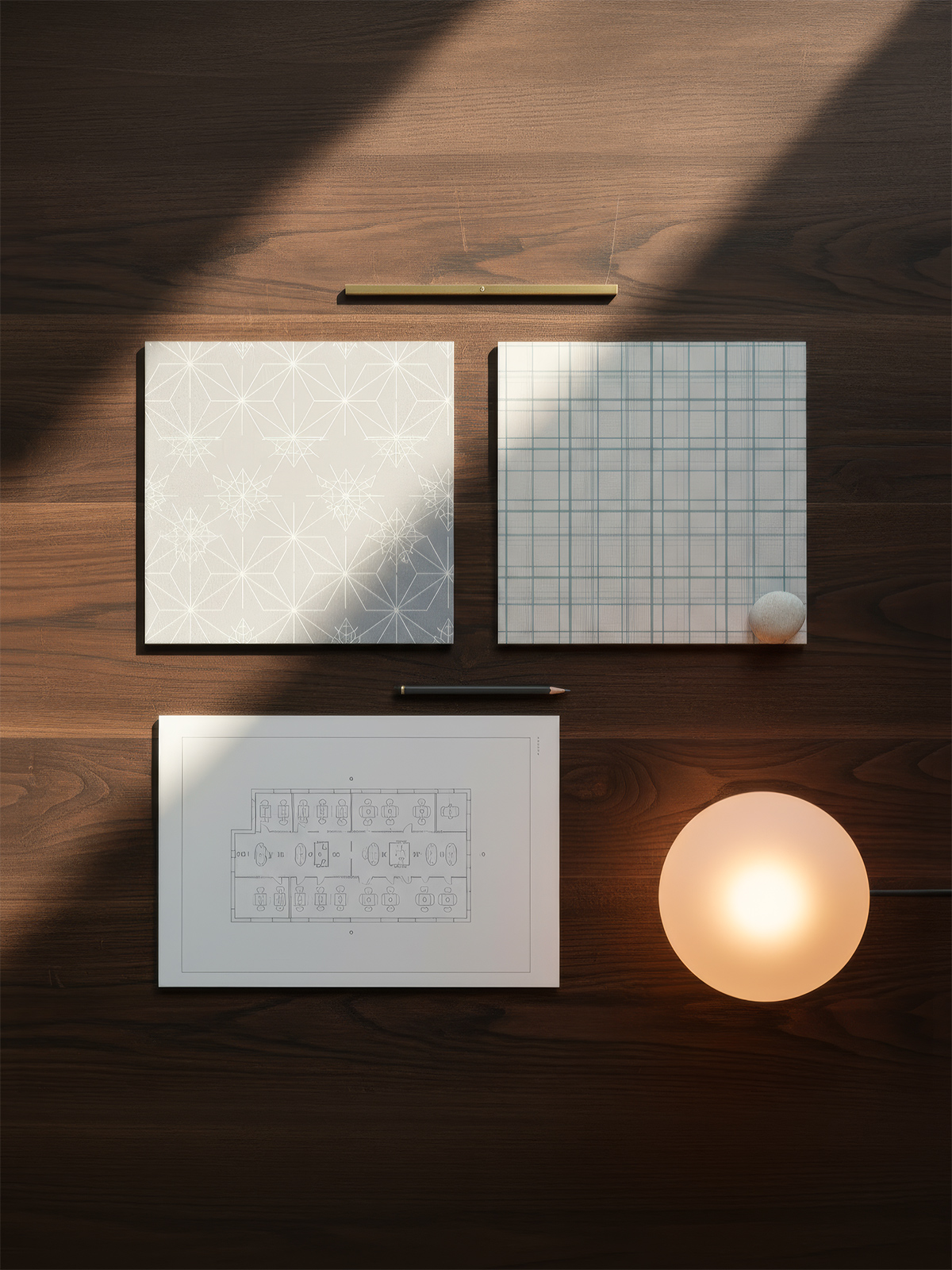
What distinguishes the wallcovering approach at 117 Strand Street is its architectural clarity. Two designs. Two distinct zones. One coherent material language that holds the entire floor together. A pale silver-grey geometric snowflake crystal pattern anchors the breakout and social zones. A fine pale blue-grey tartan grid defines the workspace and library areas. Neither design competes for attention. Both perform a specific spatial function. This is wallcovering used as a planning tool — as deliberate and considered as any structural decision on the floor.
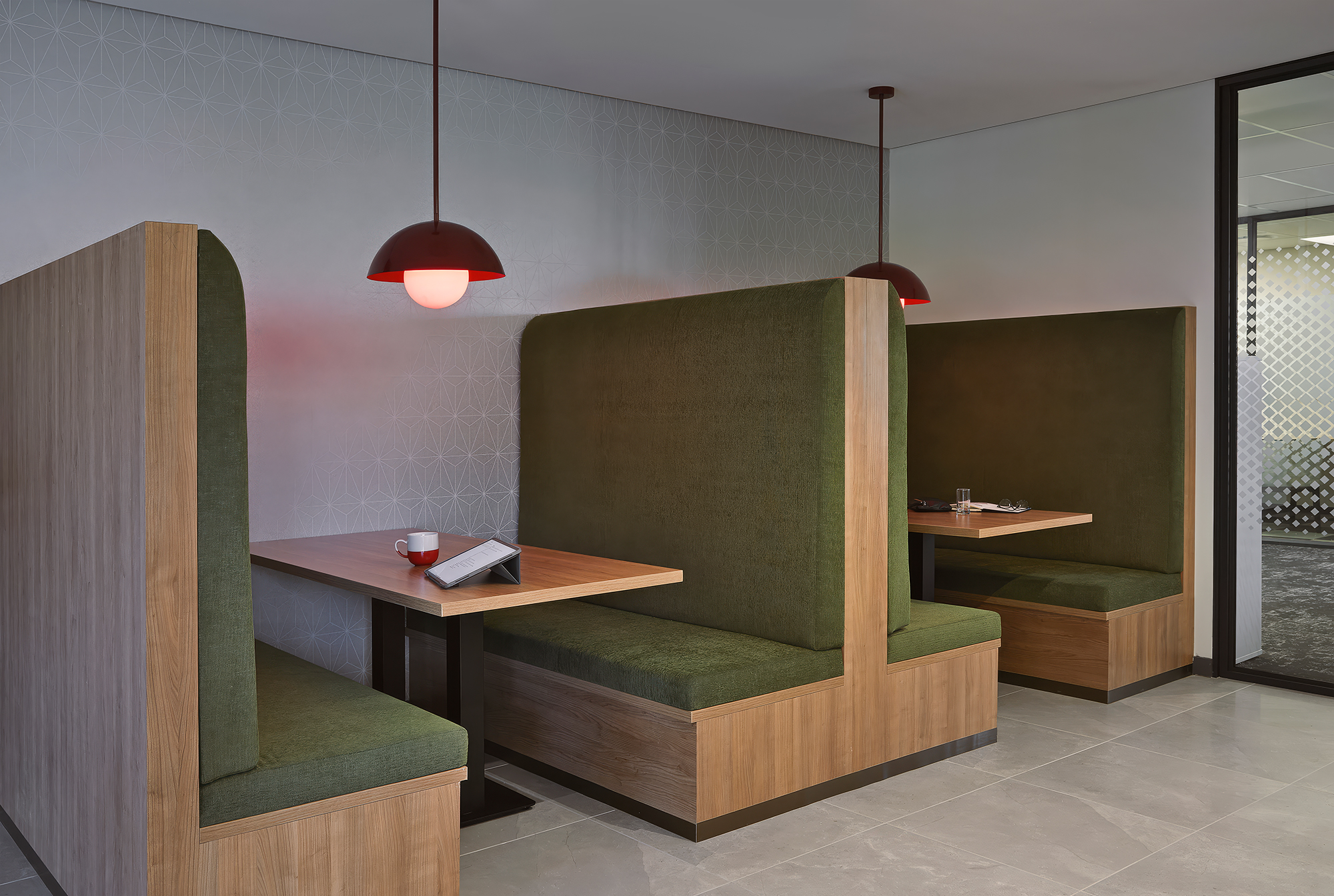
In the breakout booth zone, the silver-grey geometric wallcovering brings a quality to the wall that paint simply cannot achieve. The delicate all-over crystal star pattern — silver-white on a soft grey ground — gives the surface a quiet luminosity that responds to the warm amber glow of the dark burgundy dome pendant lamps above each booth. Against the forest green upholstered high-back seating and warm oak joinery, the wallcovering anchors the zone without dominating it. The result is a breakout space that feels genuinely hospitable — the kind of environment where people linger, think, and collaborate.

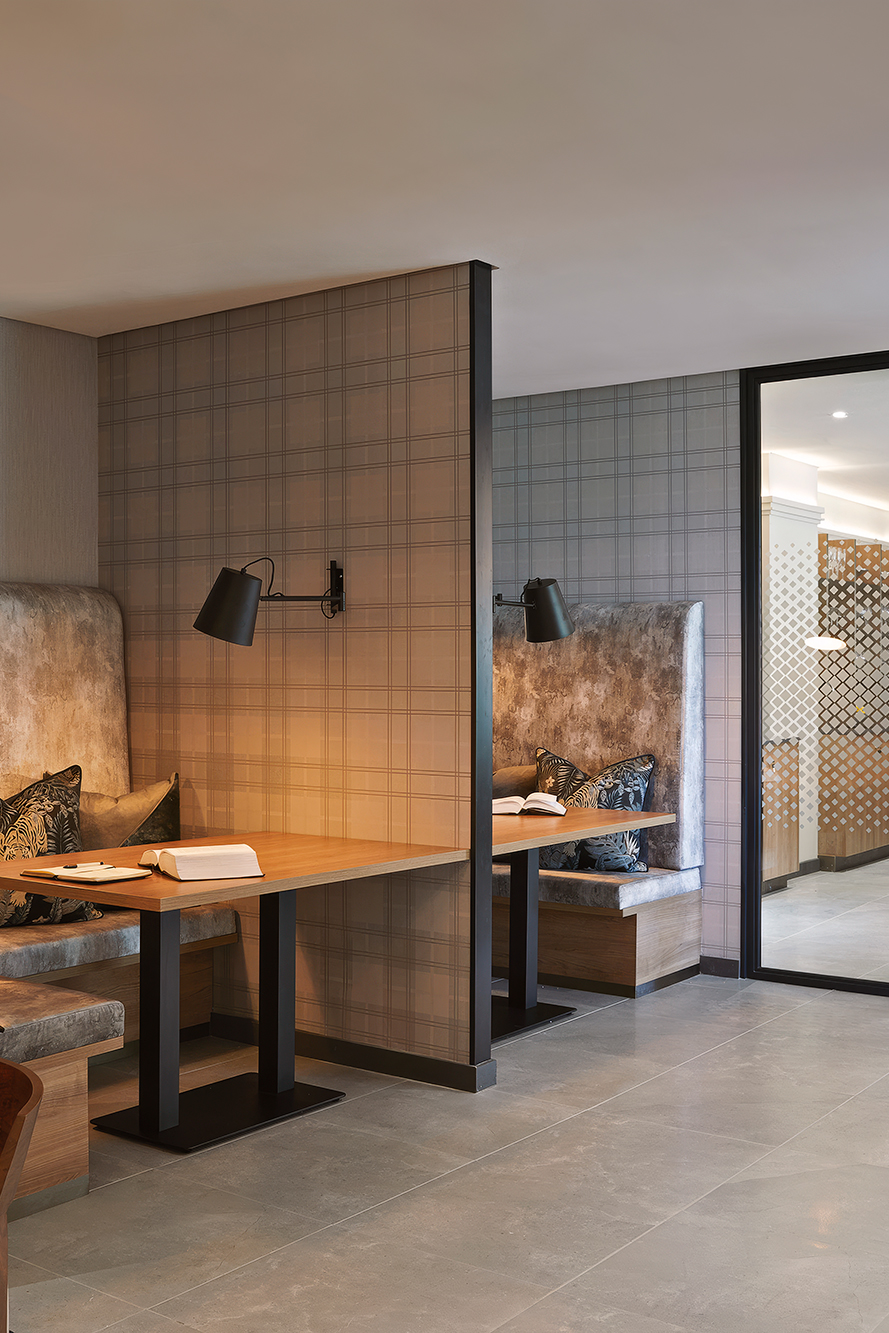
In the library and research zone, the pale blue-grey tartan grid wallcovering wraps the booth divider walls with a precision that feels almost tailored. Against floor-to-ceiling South African Law Reports in their distinctive red and dark green bindings, the wallcovering's fine grid provides a quiet geometric counterpoint — ordered, considered, and intellectually appropriate to the space. High-back booths in aged silver-grey velvet, dark botanical cushions, black wall arm lamps, and oak table tops complete an environment that has the atmosphere of a private members club and the functionality of a high-performance workplace. The wallcovering is why it feels like the former.
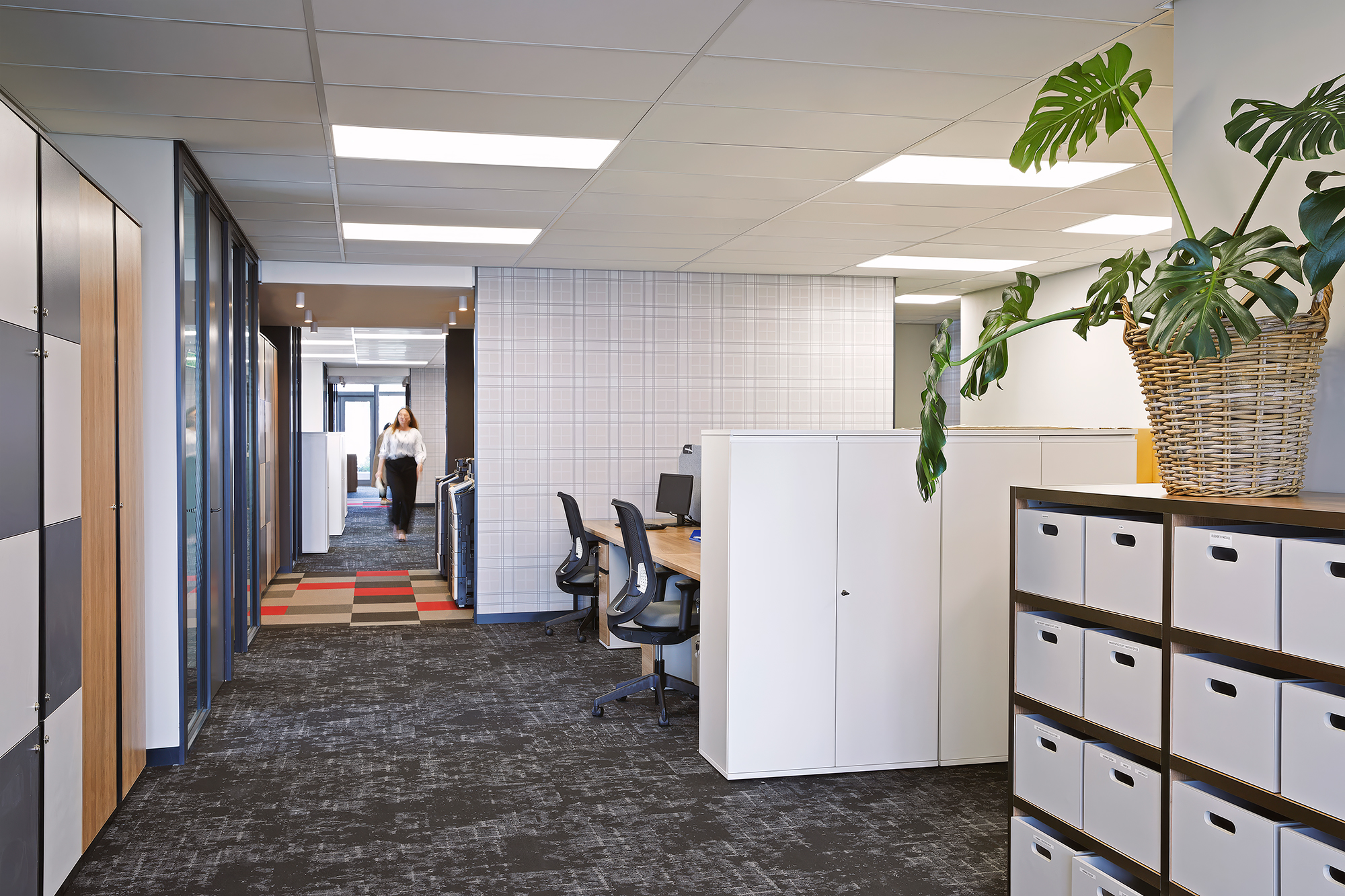
In the open plan workspace, the tartan grid wallcovering is applied to a full-height dividing wall panel — performing a planning function that no partition system could achieve with the same design sophistication. It creates zone definition, acoustic reference, and visual relief in a large open floor without introducing hard architecture. The pale blue-grey tone is calm and non-fatiguing — a colour that supports concentration rather than demanding attention. This is the most underestimated wallcovering decision in the project, and arguably the most intelligent.
What Tetris Design & Build demonstrates at 117 Strand Street is the same quality that distinguishes the finest commercial design from the merely competent: every decision is part of a system. The wallcovering choices are not applied after the fact — they are embedded in the spatial strategy from the beginning. The two designs work in dialogue across the floor, creating a coherent material narrative that makes a large and complex workplace feel resolved at every scale, from the full floor plan to the surface of a single booth wall.
117 Strand Street is the proof that wallcovering belongs in commercial design — not as decoration but as architecture. Supplied and installed by WCI Wall Coverings across multiple zones of this large Cape Town fitout, the two designs chosen by Tetris Design & Build demonstrate precisely what a considered surface can do: define space, create atmosphere, and make a workplace feel like somewhere worth being. The wall is never background here. At 117 Strand Street, it is the plan.