

Where the Wall Tells the Story: Wallcovering Design at The Brasserie
There are restaurants that feed you, and there are rooms that hold you. The Brasserie belongs to the second category — a dining space in which every surface has been considered as part of a singular, sustained vision. At its heart, this is a project about wallcovering as architectural narrative: the decision to treat the walls not as painted backdrop but as the primary storytelling medium. The result is one of the most layered and assured hospitality interiors in South Africa, a room where the architecture of atmosphere is built from pattern, colour, and the ancient visual language of the peacock.
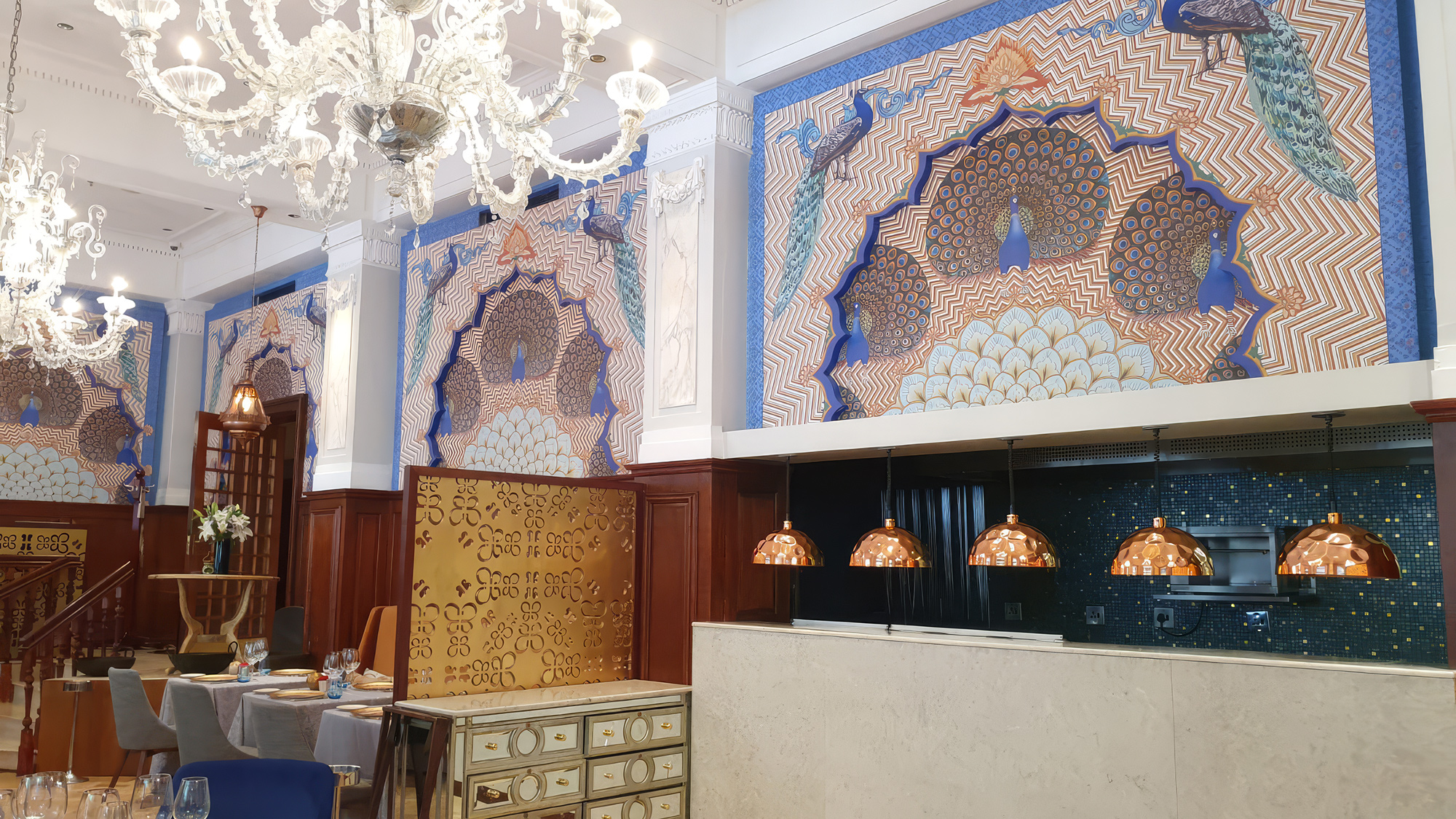
The main dining room is defined by a series of monumental mural panels — each one a complete composition in Mughal-inspired design, framed between white neoclassical pilasters that have stood in this building for over a century. Pointed horseshoe arches in deep cobalt blue contain a hypnotic field of copper-and-cream chevron patterning; within each arch, peacocks are rendered life-size in teal, amber, and indigo. Below, a sweep of cream fan-feather scallops grounds the composition before meeting the mahogany dado rail. These are not artworks hung against a wall. They are the wall — scaled, positioned, and designed to become the room's defining architecture. The chandeliers, the parquet, the velvet chairs: all of it exists in conversation with this mural.
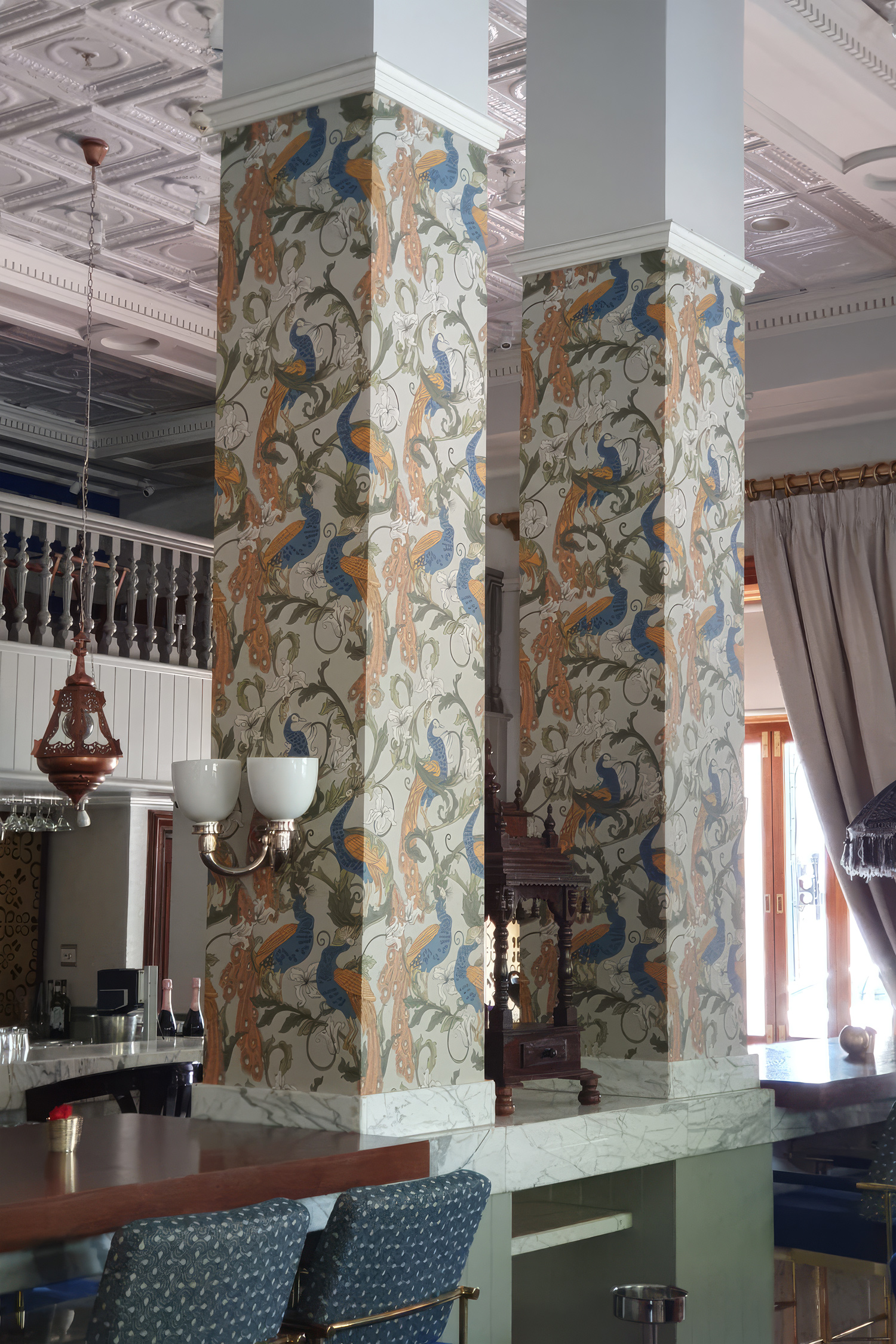
Move through to the bar and the wallcovering shifts register entirely. The structural columns are dressed in a densely woven botanical repeat — peacocks again, but this time embedded in curling acanthus foliage on a pale sage ground, rendered in the tradition of nineteenth-century decorative design. Cobalt and terracotta birds move through olive and rust greenery in a pattern that rewards close attention. The decision to use a different design on the columns rather than extending the dining room mural is one of the project’s most intelligent moves: it defines the bar zone as its own world, with its own mood and pace, while maintaining the peacock as the connective motif across the entire space.
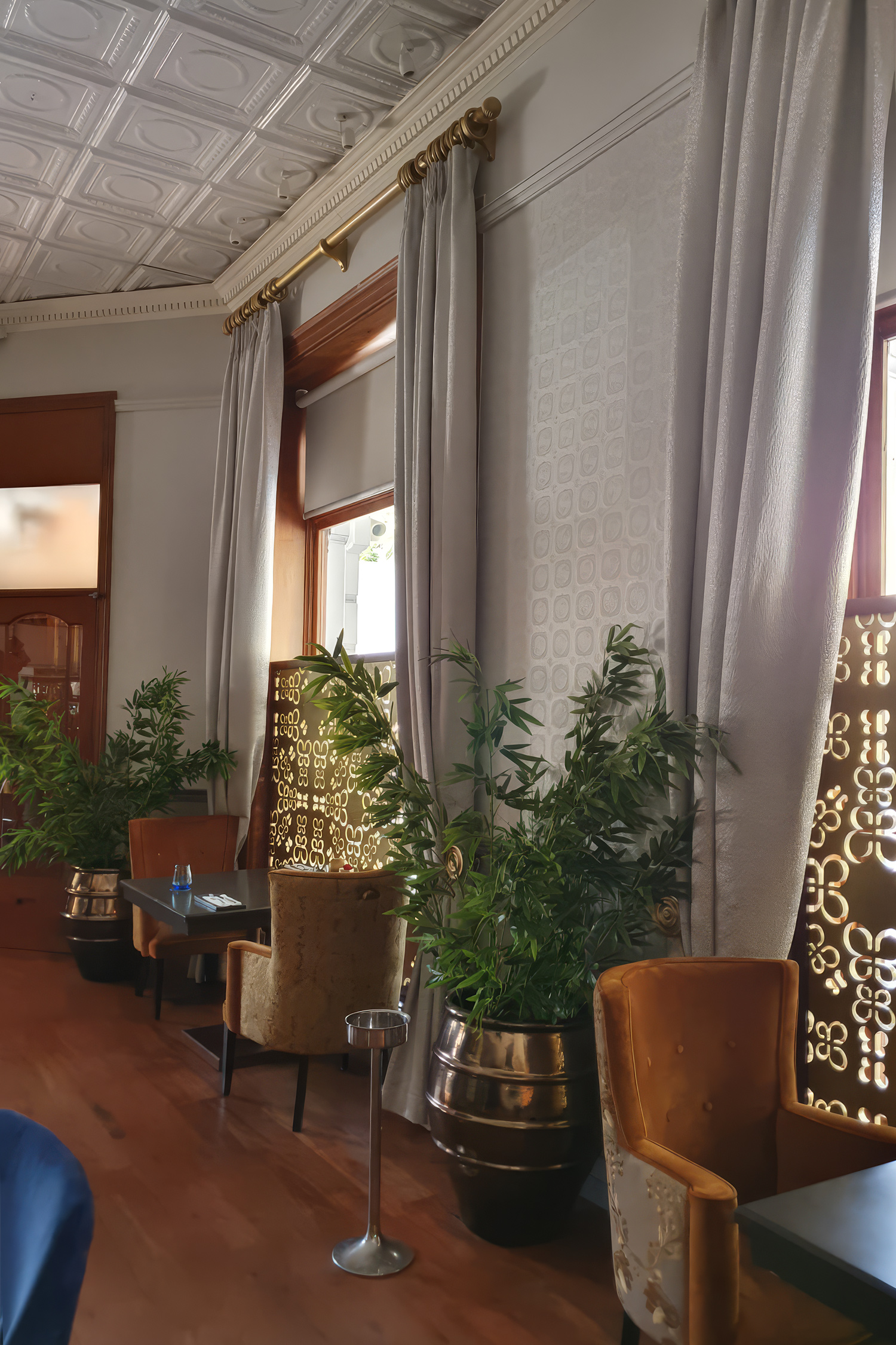
Not every surface in a great interior shouts. The lounge-side wall of The Brasserie carries a tonal embossed geometric — a soft grid of rounded forms on a pale ground that reads almost as a textile pressed into the plaster. Against the gilded brass laser-cut privacy screens and the mahogany window surrounds, it provides essential visual rest: a surface that holds without demanding. This is sophisticated restraint, and it takes as much confidence to specify as the mural. The wall is never background here — but some walls earn their place by knowing when to recede.
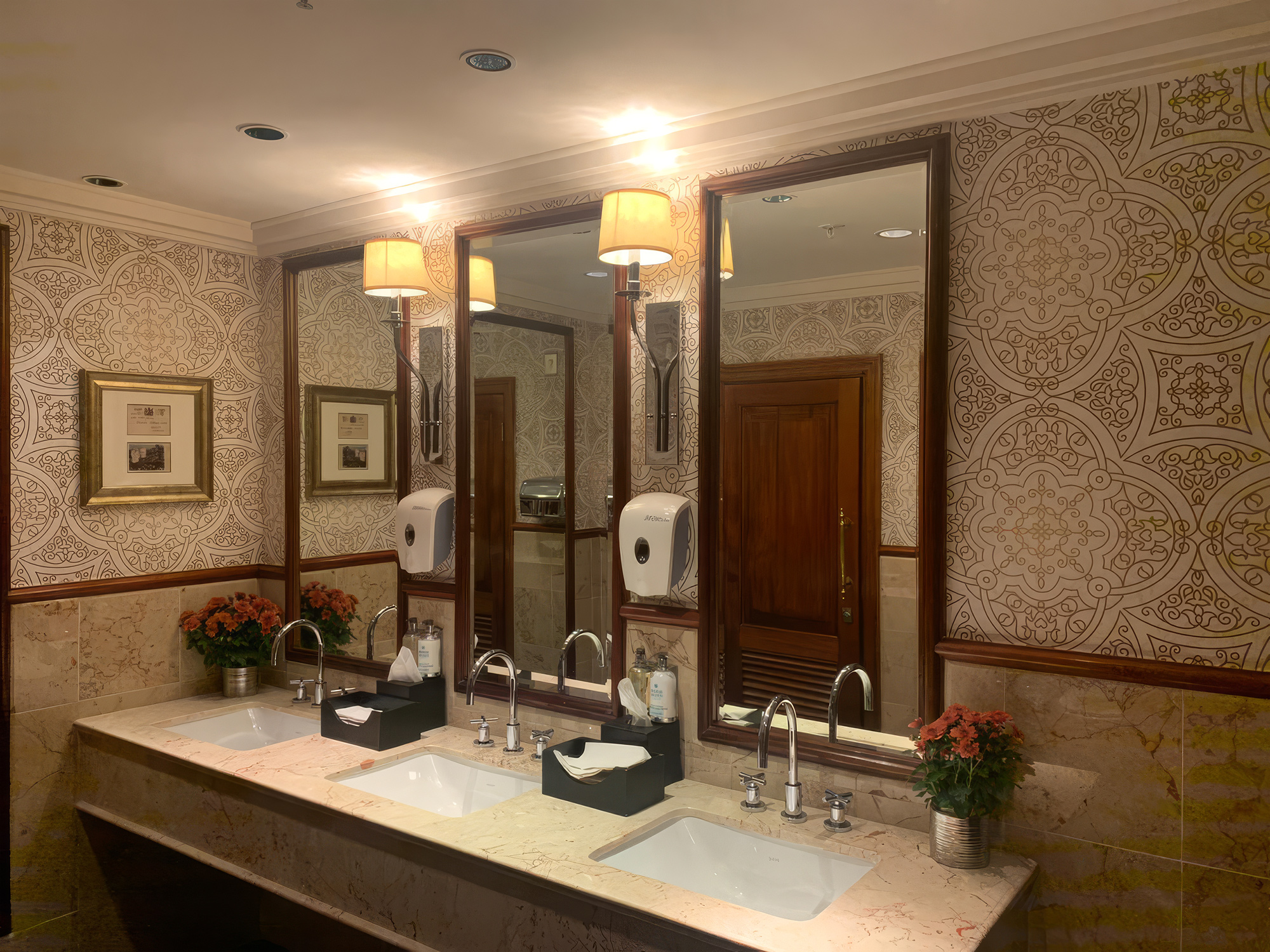
The powder room at The Brasserie is an exercise in total immersion. An interlocking arabesque medallion design in warm copper line work on cream covers every surface from dado rail to cornice — continuous, geometric, endlessly repeating. The language is Islamic in origin, distilled through centuries of decorative tradition into something that feels simultaneously ancient and precise. Warm-veined marble tile wainscoting and dark mahogany trim hold the space; the chrome fixtures and fresh flowers introduce just enough contrast. In the cubicles, the same design continues to the ceiling — the envelope complete. Guests do not pass through this room. They arrive in it.
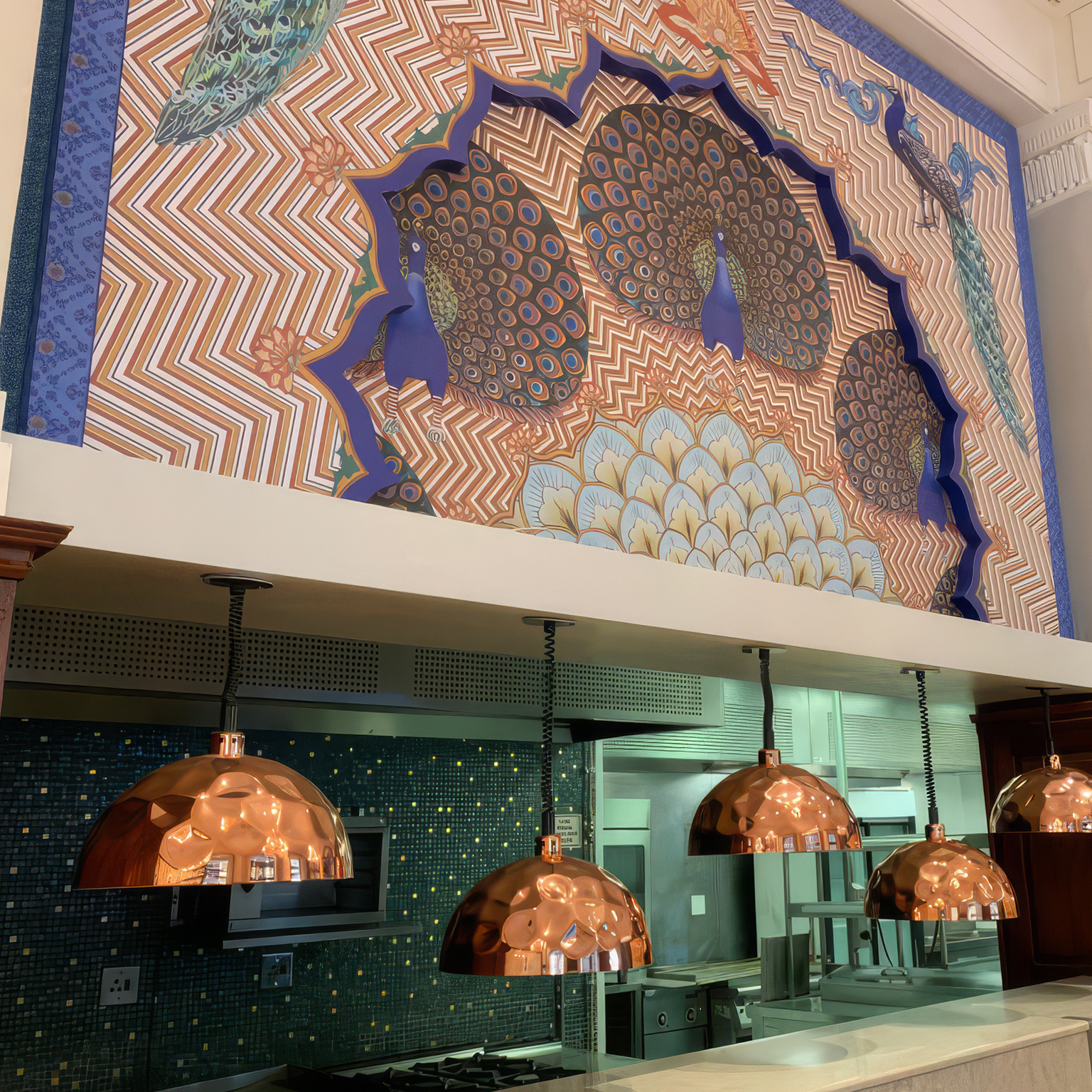
What makes The Brasserie's interior cohere across so many distinct wallcovering decisions is the rigour of its material system. Cobalt runs from the mural borders to the velvet dining chairs. Copper appears in the pendant lights above the open kitchen pass, in the brass fixtures, in the warm brown line work of the powder room wallcovering. The deep mahogany panelling and dado rails unify every zone. Crystal chandeliers overhead and dark teal mosaic at the kitchen pass introduce two more notes that feel native to the palette. The wallcoverings did not arrive into a finished room — they are the room's primary colour system, expressed in surface.
The most powerful hospitality interiors are the ones that make themselves unforgettable — where a guest leaves carrying not just a memory of the food or the service, but an image of the room itself. The Brasserie achieves this through an uncompromising commitment to the wall as the architecture of atmosphere. Four wallcovering decisions, each one precise, each one in dialogue with the others, build a space that is at once celebratory and considered, opulent and coherent. WCI Wallpapers supplied and installed the complete wallcovering programme across the dining room, bar columns, lounge, and powder rooms — a project that demonstrates what becomes possible when surface is treated as structure.